X-M · 2024 · In production
Fujifilm X-M5 review
Launch price 799 USD · 26.1 MP X-Trans IV sensor · 6K 30p video
Also written XM5 or X M5.
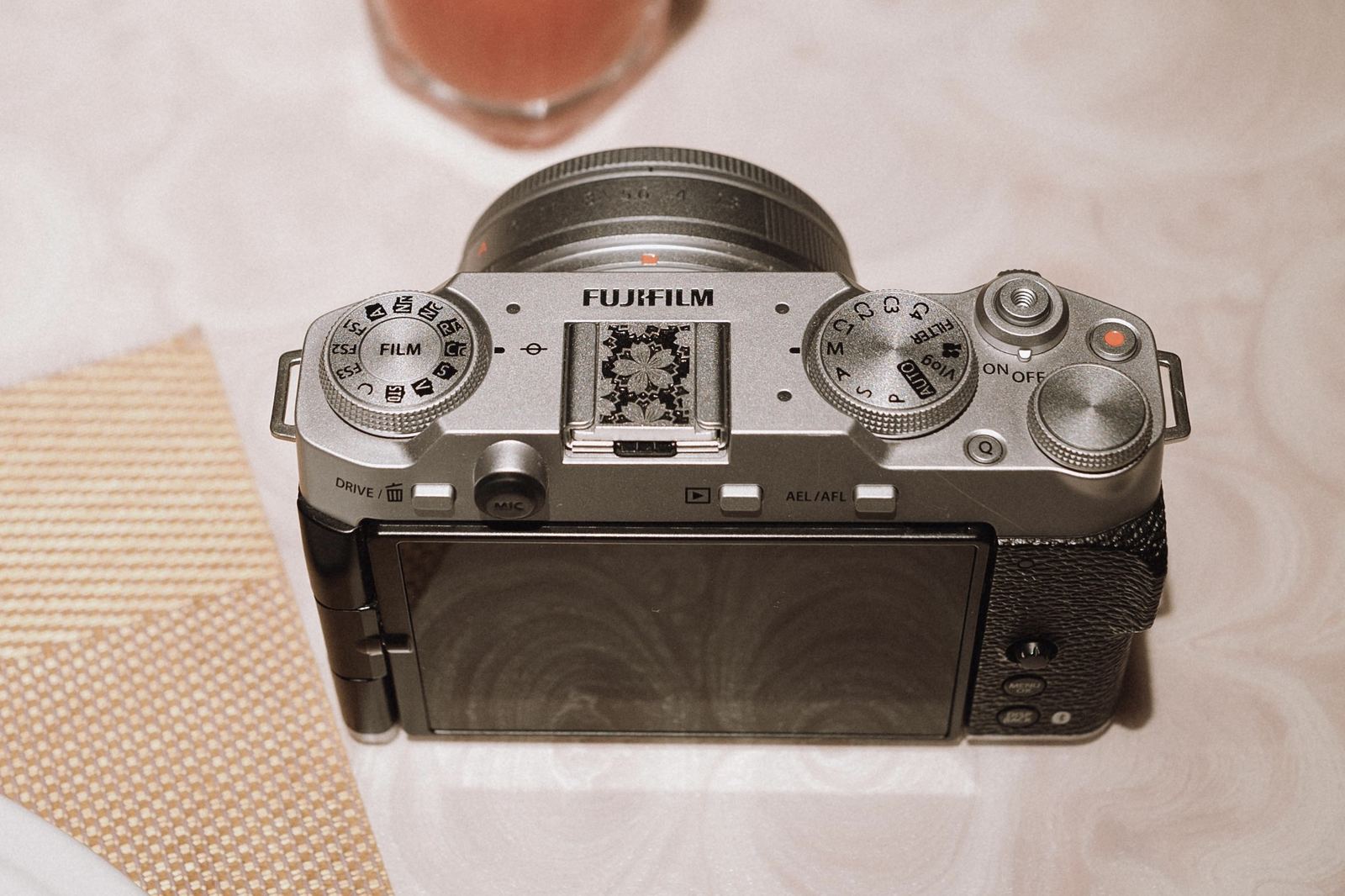
The smallest body in the X series. Built for people who film themselves: a screen that turns to face you, microphones built in, modern AI autofocus, and no viewfinder.
Verdict
The smallest camera Fujifilm makes today, and the cheapest way to get 6K video and modern AI autofocus in an X-mount body. It weighs 355g and shoots 26.1 MP stills. The screen flips out to face you. 799 USD for the body.
For people who film themselves and want a tiny camera that shoots 6K and finds focus on its own.
In detail
The X-M5 surprised me. It is the cheapest camera Fujifilm sells with a changeable lens. It has no viewfinder. It weighs 355g. Then I looked at the pictures it makes, and at the price tag, and I went back to check the price again.
Fujifilm put its newest brain, the X-Processor 5, inside its cheapest body. That is not how this usually goes. The cheap camera normally gets last year's parts. Here you get the subject tracking from the X-T5, nine film simulations, and 6K video, for 799 USD.
The sensor is the older one, 26.1 megapixels. It is the same chip that ran the X100V and the X-T4. I do not think that is a problem. Those cameras make lovely pictures. Put a good lens on the front and you will never blame this sensor for a photo you did not like.
What you give up is the viewfinder and the shake control. There is no eye-level finder at all. You hold the camera out in front of you and look at the screen, the way you do with a phone. Nothing steadies the body either. In dim light you lean on a lens that does the steadying, or on a faster shutter speed.
The rest is the usual cheap Fujifilm recipe. Plastic where you would rather have metal. No seals against rain. One card slot. Eight pictures a second, which is plenty for a walk around town and not enough for a football match.
I keep giving people the same answer when they ask me about it. This is the most camera 799 USD buys, so long as you never wanted a viewfinder.
Pros and cons
What we like
- Cheapest Fujifilm that shoots 6K, at 799 USD
- Same AI subject tracking as cameras twice the price
- Screen turns to face you, three microphones built in
- Lightest camera in the current range at 355g
The price is the headline. Nothing else at 799 USD records 6K video. Nothing else this cheap focuses this well.
There are nine film simulations on board, and that includes REALA ACE and Nostalgic Neg. Those colours are the reason most people buy Fujifilm in the first place. They work in video too. You can shoot a clip that already looks the way you want before you open a computer.
Trade-offs
- No viewfinder and nothing to steady the body
- One card slot, and it is the slow kind
- Video focus wanders when you talk to the camera
The honest cost is the missing viewfinder and the missing shake control.
Nothing steadies the body, so the lens has to do that job. The 18-55mm kit zoom, the 16-80mm f/4 and the 50-140mm f/2.8 all have it built in. The small fast primes do not. So with a 23mm or a 35mm on the front, a faster shutter speed is your only defence against a shaky hand.
There is also one card slot, and it is the slow kind. If that card dies, the pictures on it die with it. Backing up is your job.
Who is this for
This camera is for the person who films themselves. If you work alone, hold the camera out at arm's length, and want the screen looking back at you while you talk, this is the cheapest good way to do it.
It is also a fine first Fujifilm. If you are coming off a phone and you want those colours, you will be happy. And you will not have spent 1500 USD to find out whether you like the system.
Image quality
The sensor is a 26.1 MP X-Trans CMOS 4. The processor behind it is the current one, the X-Processor 5. Old chip, new brain. It is the same pairing you get in the X-S20 and the X-T30 III.
So the files look like X-Trans IV files, and I mean that as a compliment. This is the sensor that carried the X100V, the X-T4 and the X-Pro3.
One owner on r/fujifilm has been through most of the range, from the first X100 up to the X100V, plus an X70, an X-Pro2, an X-T1 and an X-T3. After a day with the X-M5 he said the pictures felt very close to his X100V. He also said he would take this sensor over a 40 MP one for the work he does. That matches what I see. Pick a good lens and the body is not the thing holding you back.
You get nine film simulations, some on the dial and the rest in the menus, and the list includes REALA ACE and Nostalgic Neg. The X-E4 and the X-T30 II shipped with fewer. ISO starts at 160 and runs to 12800, and it stays clean up to about 3200.
The thing to plan around is not the sensor. It is the missing shake control. With nothing steadying the body, and a kit zoom that only opens to f/3.5, indoor and evening shots push the ISO higher than they would on an X-S20.
Photos shot on the X-M5
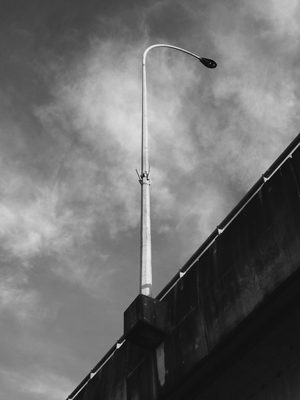
We shot and published 12 frames on the X-M5, September 2025 to November 2025. Click any thumbnail for the full-size file and its settings on masnun.photos. These are edited photographs, not resolution tests — read them as a record of what the camera actually gets used for.











Autofocus in practice
This is the part of the camera that surprised me.
X-Processor 5 hands the cheapest body in the range the same subject detection as the X-T5. It looks for people, animals, birds, cars, motorbikes, bicycles, planes and trains. On top of that it finds faces and eyes.
The owner report I trust most here comes from someone who has used every generation of Fujifilm autofocus since the first X100. He said the X-M5 was the first one that genuinely impressed him. Eyes locked in dark rooms. Sharp frames he had already given up on. Kevin Mullins, who has shot Fujifilm for years, says much the same in his review and puts it level with cameras that cost far more.
The same owner adds a warning, and it is a fair one. Straight out of the box the focus is only okay. Fujifilm's menus make it harder than it should be to set up properly. Swapping between the smart mode and the simple one takes two steps where it should take one. Give it an evening with the manual and it wakes up.
Burst tops out at eight pictures a second. This is not a sports camera. For everything else, the focus is far better than 799 USD normally buys.
Video verdict
6.2K at 30 frames a second, using the whole sensor. 10-bit colour. F-Log2 for people who grade their footage. A tall mode for phone-shaped video. All of that in a 355g body that costs 799 USD. Digital Camera World called it a pocket-sized powerhouse for vlogging, and I cannot argue with them.
Open gate is the fun part, and the name makes it sound harder than it is. The camera records the whole sensor, corner to corner, instead of a wide strip across the middle. So one take gives you a wide version for YouTube and a tall version for a phone feed. You shoot once and cut twice.
Some numbers to plan around. The 6.2K mode writes 200 megabits a second. 4K at 50 or 60 frames does not use the full width of the sensor, it crops in by 1.18 times. 1080 at 240 frames crops by 1.29 times. Switch on the digital steadying and it crops again, somewhere between 1.32 and 1.44 times. A wide lens stops being wide.
Heat is the other thing to plan around. CineD went through Fujifilm's own figures. In a 25 degree room the camera keeps recording 4K in its Long Play mode for over an hour. Take it out into 40 degree heat and the demanding modes stop after about twenty minutes. Fujifilm sells a small fan, the FAN-001, that clips onto the back and pushes that past an hour. In a normal room you will never think about any of this.
There are three microphones built into the body, with a wind filter, and they are better than they need to be. There is a 3.5 mm socket for a better microphone. There is no headphone socket. So you can improve the sound going in, but you cannot listen to it while you record.
The gap is steadying. Nothing holds the body still. Handheld footage needs a lens that steadies, or the digital steadying and its crop, or a gimbal. There is also no 4K at 60 frames without that crop.
Sit it on a desk or a small tripod and it is a lovely little video camera. If you walk and talk for a living, spend more and get the X-S20. It steadies the body and it has a headphone socket.
What makes this camera special
Two things make this camera unusual. It is the smallest body Fujifilm sells with a lens mount, at 355g, lighter even than the X-E4. And it is the cheapest way to get the current processor and a film simulation dial.
Normally the cheap camera gets the old parts. Not this time. You get X-Processor 5, the AI subject detection, REALA ACE and the full-sensor 6K video. You pay for all that by giving up the viewfinder, the shake control and some of the build quality.
Is the film dial a gift or a gimmick? It depends who you ask. Kevin Mullins points out that not every simulation sits on the dial, so you still end up in the menu for the rest. An experienced owner on r/fujifilm made the sharper point. Only four of the dial's twelve positions can be set by you. He wanted a dial you fill yourself, with room for twenty-five saved recipes for the people who love that sort of thing, and two slots for the people who do not. He is right.
The big decision is the viewfinder, or rather the missing one. Composing on a screen in bright sun is hard work. You tilt the camera about to kill the glare. You squint. Turning the brightness up only helps a little. If you have never missed a viewfinder, this is the most camera 799 USD buys. If you use one, buy an X-T30 III and be happy.
What X-M5 owners actually say
New buyers love this camera. Long-time Fujifilm owners are much harder on it. Both reactions tell you something true, so it is worth hearing both before you spend anything.
The most detailed owner review on r/fujifilm comes from someone who has owned fourteen Fujifilm bodies. He is blunt about the build. He says it feels like a toy. The shutter button and the power switch feel like plastic to him. He rates the body below an X-E3, closest to the XF10, and well behind the old X30. His point is not that the pictures are bad. His point is that build quality is part of why people buy Fujifilm, and this body does not deliver it. He also dislikes the mode dial, which has no lock and no click stops, and he finds the record and Q buttons awkward where they sit beside the top dials.
The rest of his post is warm. The focus impressed him after ten years of Fujifilm cameras. The pictures matched his X100V. He thought the kit zoom was worth its hundred dollars. The one thing he wanted and did not get was shake control in the body. He notes that Ricoh fits it into the smaller GR, so leaving it out here looks like a decision about price rather than space.
Newcomers describe a completely different camera. One wrote a post about the X-M5 curing what they called their iPhone photo delusion. That is the sentence Fujifilm would happily put on a poster. When a first-time buyer asks which camera to get, the thread almost always comes down to this one against the X-T30 III. And the thing that decides it is almost always the viewfinder.
Stock was a problem early on. One owner got tired of waiting for one and bought an X-T30 II instead. The two cameras are close enough that this is a fine ending to the story.
The reviewers split the same way, from the other side. PetaPixel gave it a shrug, a plain maybe, and the reason was the screen rather than anything the sensor did. Kevin Mullins went the other way and rated the focus against cameras that cost twice as much.
One criticism did catch me off guard, because it lands on the job this camera was built for. PetaPixel found the video focus wandering off the subject and grabbing the background during vlogging takes, and put the Sony ZV-E10 II ahead of it for that. For photographs the focus is excellent. For a talking-head video, test it in the first two weeks, while you can still send the camera back.
“Composing on bright and sunny days is tricky without a dedicated EVF. The back panel is all you have, and it's nothing to write home about.”
“One of the biggest strengths of the X-M5 is its autofocus system, which is on par with higher-end Fujifilm cameras like the X-T5 in my opinion.”
Is the X-M5 still worth buying in 2026?
Yes, and there is one question to settle first. The viewfinder.
The X-M5 is still being made and still costs 799 USD for the body. The camera it stands next to in every shopping thread is the X-T30 III at 999 USD. The two share the processor, the nine film simulations, the battery and the same slow card slot. The extra 200 USD buys you a viewfinder to hold up to your eye, and a screen that tilts instead of swinging out to the side. That is most of the difference between them.
So the question is not which camera is better. The question is where you hold a camera when you take a picture. If you hold it out in front of you and look at a screen, the way a phone taught all of us, buy the X-M5. Its screen is the better screen. If you press a camera to your eye, or you shoot outside in hard sun, buy the X-T30 III and stop thinking about it.
There is a third answer, and it is the X-S20 at 1299 USD. It steadies the body, it takes a bigger battery good for 750 shots, and it has a headphone socket and a faster card slot. If handheld walking-and-talking video is how you earn money, that is your camera. The extra 500 USD is a tool you are buying, not a treat.
One word on buying used. This camera is still in the shops, so a used one is not the bargain a discontinued body would be. Check the price of a new one before you agree to a used one. And remember that a used camera comes with a battery that has already lived part of its life.
X-M5 questions people ask
- Does the Fujifilm X-M5 have a viewfinder?
- No. There is no viewfinder of any kind. You compose on the 3-inch screen on the back, which swings out to the side and turns to face you. In bright sun that is harder than looking through a finder, and turning the brightness up only helps so much. If that bothers you, the X-T30 III is the same generation of camera with a viewfinder, for 200 USD more.
- Does the X-M5 have image stabilisation?
- Not in the body. The lens has to do that work. The XC 15-45mm kit zoom, the XF 18-55mm and the XF 16-80mm all steady the picture for you. For video there is a digital version, but it crops the frame by 1.32 to 1.44 times, so a wide lens stops looking wide. For photographs with a lens that does not steady, a faster shutter speed is your only fix.
- Does the X-M5 overheat?
- Not in normal use. Fujifilm says you get over an hour of 4K in Long Play mode in a 25 degree room. Take it out into 40 degree heat and the demanding modes stop after about twenty minutes. The FAN-001 fan clips onto the back and pushes that past an hour. If you film short clips, you will never meet the limit.
- Is the X-M5 good for photography, or is it only a video camera?
- It is a good stills camera. The 26.1 MP sensor inside it is the same one that ran the X100V, the X-T4 and the X-Pro3. The X-Processor 5 behind it brings the subject tracking from cameras that cost twice as much. Burst tops out at eight pictures a second, so fast sport is out. For street, travel and family photographs, the lens on the front will limit you long before the body does.
- What SD card does the X-M5 need?
- A UHS-I card rated V30 is all it can use. The slot is the slower kind, so a faster UHS-II card would only run at UHS-I speed anyway. The hungriest video mode needs about 25 MB a second, and a V30 card gives you far more than that. A 128 GB card holds roughly an hour and a half of 6.2K footage.
- What battery does the X-M5 use and how long does it last?
- It takes the NP-W126S, the same battery as the X-T30 III, the X100VI and the X-E4. Fujifilm rates it at 330 pictures. Video drains it much faster, so carry a spare if you are filming. The camera charges over USB-C, and it will also run off a USB-C power bank, which is often easier than carrying spare cells.
- Is the X-M5 weather sealed?
- No. Nothing on this body is sealed, so keep it away from rain, sea spray and dust. If you shoot outside in bad weather often, look at the X-T5 or the X-S20 with a sealed lens instead.
- Can the X-M5 shoot vertical video for social media?
- Yes, in two ways. There is a mode that records a tall 9:16 frame directly, so you never turn the camera on its side. There is also the 6.2K mode that records the whole sensor. From one of those takes you can cut a wide version and a tall version afterwards.
- Should I buy the X-M5 or the X-T30 III?
- They share the sensor, the processor, the film simulations, the battery and the card slot, so picture quality does not decide it. The X-M5 is smaller and cheaper, and its screen swings out to face you, which suits video and shooting at arm's length. The X-T30 III costs 200 USD more and gives you a viewfinder to hold to your eye, plus a screen that tilts. That suits people who lift a camera to their face.
X-M5 accessories worth buying
The X-M5 charges its battery inside the camera, over USB-C. That is handy right up to the morning you want to shoot while a battery fills.
That one detail tells you what kitting this camera out is like. The things worth buying are small, cheap and dull. Here is what I would get, roughly in the order I would get it. The first three cost less together than one cheap lens, and each one takes away a real headache. The rest depends on whether you shoot video or photographs.
Memory card
A 128 GB UHS-I V30 SD card, and then a second one
There is one card slot and it is the slower kind, so a card here writes about 100 MB a second at best. The hungriest video mode needs 25 MB a second. A V30 card gives you three times the room you need. Buy two smaller cards instead of one big one. Then a lost or broken card costs you half a trip rather than the whole trip.
Power
The camera is rated for 330 pictures on a charge. Video drains it far faster than photographs do. One spare covers a day of shooting. Two covers a day of filming. Fujifilm's own batteries cost more than the copies, and they hold up better in the cold.
Power
Charging happens inside the camera, so a flat battery means a camera you cannot use. A two-slot USB charger costs less than one spare battery. Fill both cells overnight while the camera sits in the bag.
Power
A USB-C power bank that supports Power Delivery
Plug the camera into a USB-C power bank and it will both run and charge from it. On a long recording, or a long day out, one power bank is lighter than three spare batteries.
Glass
The pancake lens. It is what makes this camera as small as it was meant to be, small enough for a jacket pocket. It frames about as much as a 41 mm lens did on film, which is close to how you see a scene across a table. It also gathers about a stop and a half more light than the kit zoom. Buy one lens for this body and buy this one.
Glass
Nothing steadies this body, so the lens has to do it. This zoom does. It also gathers about a stop more light than the kit zoom and it focuses faster. For indoor and evening photographs it is the biggest single jump you can make.
Glass
The kit zoom, and the cheapest lens you can buy that steadies the picture for you. Its zoom runs on a motor, which is the only way to zoom smoothly while you are filming. It is the softest lens on this list, and it is still the right first lens for most people.
Handling
A thumb grip or a leather half case
The complaint owners make most often is that this body is slippery and there is almost nothing to hold on to. A thumb grip slides into the hot shoe and gives your thumb something to push against. A half case costs more, adds a proper bump for your fingers and protects the bottom of the camera. Either one makes the camera feel more expensive than it is.
Video
A handle with a record button on it, which folds open into a small tripod. It talks to the camera over Bluetooth. If you hold the camera out and talk to it, this changes your day more than any number on the spec sheet. It works with the X-S20 and the X100VI too.
Video
Three microphones are built into the body, with a wind filter, and they are better than they need to be. Stand near traffic and they lose. A small shotgun microphone in the 3.5 mm socket fixes that. There is no headphone socket, so you cannot listen while you record either way.
Video
A variable ND filter in your lens thread size
When you film outside you want the shutter near 1/60 of a second, because that is what makes movement look natural. In daylight that setting makes the picture far too bright. A dark filter on the front of the lens is the only cure. Check the ring size on your lens before you order. The kit zoom takes 52 mm and the 27 mm pancake takes 39 mm.
Video
Only if you film long takes somewhere hot. Fujifilm says the demanding modes stop after about twenty minutes at 40 degrees. The fan pushes that past an hour. In a cool room, or for clips of a few minutes, save your money.
What to skip
- A UHS-II SD card — The slot is the slower UHS-I kind. A UHS-II card fits, and then runs at UHS-I speed. You would pay roughly double for speed the camera cannot use.
- A battery grip — There is not one. Fujifilm makes no grip for this body. The listings that use those words are hand grips and brackets, and they hold no extra battery.
- An add-on viewfinder — No electronic finder fits this camera. An optical finder in the hot shoe shows you a rough frame and nothing else. No focus, no exposure, no film simulation. If you want a viewfinder, buy an X-T30 III rather than building one out of parts.
Accessory links run an Amazon search rather than pointing at one listing, because stock and sellers move around. As an Amazon Associate we earn from qualifying purchases, at no extra cost to you.
Rating breakdown
| Dimension | Score |
|---|---|
| Image quality | 7 / 10 |
| Autofocus | 8 / 10 |
| Video | 8 / 10 |
| Handling | 5 / 10 |
| Value | 8 / 10 |
Sub-ratings are the author’s assessment of each dimension against the current Fujifilm APS-C lineup.
X-M5 release date and lifecycle
The Fujifilm X-M5 was announced in October 2024.
| Announced | |
|---|---|
| Launch price | 799 USD |
| Status | Still in production |
| Replaced | X-M1 |
Announcement month is from Fujifilm’s launch announcement; the on-sale month is not recorded for this body. Launch price is MSRP at release, not a used-market price.
Full specifications
| Release year | 2024 |
|---|---|
| Launch price | 799 USD |
| Status | Current |
| Megapixels | 26.1 MP |
| Sensor generation | X-Trans IV |
| Processor | X-Processor 5 |
| ISO range | 160–12800 |
| AF points | 425 |
| Subject detection | ai |
| Burst (fps) | 8 |
| Max video | 6K 30p |
| Codec | H.265, H.264 |
| Log profile | F-Log2 |
| Stabilization | None |
| Viewfinder | None |
| LCD | 3" flip touch |
| Weather sealed | No |
| Weight | 355g |
| Card slots | 1 |
| Card types | SD UHS-I |
| Battery | NP-W126S |
| Battery life (CIPA) | 330 shots |
| Film sims | 9 |
Highlighted rows are class-leading within the current Fujifilm APS-C lineup.
Film simulations (9)
- PROVIA
- Velvia
- ASTIA
- Classic Chrome
- REALA ACE
- Classic Neg.
- Nostalgic Neg.
- ETERNA
- ACROS
Compared with


Fujifilm X-M5 vs siblings
How the X-M5 stacks up against the closest siblings in the current Fujifilm lineup.
Fujifilm X-M5 vs X-M1
The Fujifilm X-M5 and Fujifilm X-M1 are both Fujifilm X-M bodies. The X-M5 is the newer of the two, arriving in 2024. At launch the X-M5 was 799 USD and the X-M1 699 USD, making the X-M1 the more affordable of the two.
Fujifilm X-M5 vs X-T30 II
The Fujifilm X-M5 and Fujifilm X-T30 II are Fujifilm APS-C bodies from different lines — the X-M and the X-T. The X-M5 is the newer of the two, arriving in 2024. At launch the X-M5 was 799 USD and the X-T30 II 899 USD, making the X-M5 the more affordable of the two.
Fujifilm X-M5 vs X100VI
The Fujifilm X-M5 and Fujifilm X100VI are Fujifilm APS-C bodies from different lines — the X-M and the X100. Both launched in 2024. At launch the X-M5 was 799 USD and the X100VI 1,599 USD, making the X-M5 the more affordable of the two.
Further reading
Article
How to get phone-like HDR photos from a Fujifilm camera
Your phone takes eight dark photos and averages them. Here are five ways to get the same result on a Fuji, explained from scratch with no jargon.
Article
Quick Switching between Color and B&W profiles on Fuji bodies
The Nikon Zf has a B&W switch. You can build the same thing on a Fuji: FS slots on the film simulation dial, or a Recall C1 button on everything else.
Article
Fujifilm X-M5 as Ricoh GR alternative
The GR does one thing nothing else does, and it is not what you think. Where the X-M5 plus a pancake matches it, where it does not, and which of the four small lenses to buy.
Where to buy
The link below runs an Amazon search for this camera rather than pointing at one listing, because stock and sellers move around. As an Amazon Associate we earn from qualifying purchases — at no extra cost to you.

See it in the wild
Owner impressions and real-world photos from the Fuji community.


Sources and further reading
Specs come from Fujifilm. Measured results, other reviewers’ verdicts, and owner reports are credited to the people who did the work:
- Fujifilm — X-M5 product page and specifications
- DPReview — X-M5 in-depth review, "a camera for the content age"
- Digital Camera World — X-M5 review, "a pocket-sized powerhouse of a vlogging camera"
- Amateur Photographer — X-M5 review, "small and (almost) perfectly formed"
- Kevin Mullins — X-M5 review (autofocus, the dial, and who it is not for)
- Dustin Abbott — Fujifilm X-M5 review
- r/fujifilm — "X-M5 initial thoughts" from an owner of fourteen Fujifilm bodies (build quality, the dial, the missing IBIS)
- r/fujifilm — "X-M5 cured my iPhone photo delusion (newbie perspective)"
- r/fujifilm — "Fujifilm X-M5 vs X-T30 III for a beginner?"
- PetaPixel — X-M5 review, “agonizingly close to entry-level excellence”
- CineD — X-M5 announcement: recording modes, bitrates, crops and heat limits
- Fujifilm — accessories listed as compatible with the X-M5
- TechRadar — X-M5 review, “a tiny powerhouse of a vlogging camera”