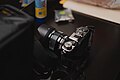
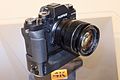
The Fujifilm X-T3 and Fujifilm X-T2 are both Fujifilm X-T bodies. The X-T3 is the newer of the two, arriving in 2018. At launch the X-T3 was 1,499 USD and the X-T2 1,599 USD, making the X-T3 the more affordable of the two.
On paper the X-T3 is the stronger body of the two. It gives you 26.1 MP of resolution, 11 fps continuous shooting, and face/eye-detection AF, with a few smaller wins on top of that.
The X-T2 isn't far behind. It hits back with a lighter 507g body.
So which one? If you want 26.1 MP of resolution, get the X-T3. If a lighter 507g body is closer to what you actually need, the X-T2 is the smarter buy. And the X-T3 costs less — 1,499 USD at launch.
Where the X-T3 wins
+26.1 MP of resolution
+11 fps continuous shooting
+face/eye-detection AF
+4K/60p video
+a 3.69M-dot electronic viewfinder
+390-shot battery life
Where the X-T2 wins
+a lighter 507g body
Who should buy the X-T3 or X-T2?
Buy the X-T3 if…
Pick the X-T3 if 26.1 MP of resolution, 11 fps continuous shooting matters to you. It also launched cheaper at 1,499 USD. It is the better fit for buyers who already lean toward X-T handling. Read the full X-T3 review for the use-case-specific pros and cons.
Buy the X-T2 if…
Pick the X-T2 if a lighter 507g body matters to you. It is the better fit for buyers who already lean toward X-T handling. Read the full X-T2 review for the use-case-specific pros and cons.
Resolution barely moves between these two — 24.3 MP on the X-T2, 26.1 MP on the X-T3 — and that is not the reason to upgrade. The reason is underneath. The X-T2 pairs X-Trans III with the X-Processor Pro; the X-T3 was the first X-T with X-Trans IV and X-Processor 4, which reads the sensor faster, cuts rolling shutter in electronic shutter, and lifts burst from 8 fps to 11 fps. The X-T3 also brings ETERNA, which the X-T2 never got. If you shoot JPEG and like Fuji's colour, that one simulation is a real reason to prefer the newer body.
Autofocus
This is the widest gap between them. The X-T2 has 325 AF points and no subject detection at all, so you are focusing and recomposing, or trusting a centre point on a moving subject. The X-T3 jumps to 425 phase-detect points covering nearly the whole frame, plus face and eye detection that holds on to a person walking toward you. For street, kids, and events the difference shows up as keeper rate, not as anything you see in a spec table. For landscapes on a tripod, neither camera is holding you back.
Video
The X-T2 does 4K/30 with F-Log. The X-T3 does 4K/60, and was the first APS-C body to manage it. If video is anywhere in your plans, that alone decides it — 60p gives you slow motion at 4K instead of forcing you down to 1080. Neither body has in-body stabilization, so both want a stabilized lens or a gimbal for handheld work.
Which one to buy used
Both are discontinued, both are weather-sealed, both take dual SD UHS-II cards, and both run the NP-W126S battery (340 shots CIPA on the X-T2, 390 on the X-T3). The X-T2 is 507g against 539g for the X-T3, and with the booster grip it is still one of the most-loved bodies Fuji has made. Buy the X-T2 if it is meaningfully cheaper and you shoot deliberately. Buy the X-T3 for anything with movement in it — the AF and 4K/60 are worth the premium, and it is the better long-term keeper.
Highlighted cells are best in class between these two. Specs sourced from public Fujifilm product pages.
In-depth reviews
For the full long-form review of each camera, see the Fujifilm X-T3 review and the Fujifilm X-T2 review. Each one carries the full spec breakdown, pros and cons, and where this body sits in the current Fujifilm lineup.