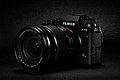
The Fujifilm X-T5 and Fujifilm X-T4 are both Fujifilm X-T bodies. The X-T5 is the newer of the two, arriving in 2022. Both launched at 1,699 USD.
On paper the X-T5 is the stronger body of the two. It gives you 40.2 MP of resolution, AI subject-detection AF, and 6K/30p video, with a few smaller wins on top of that.
The X-T4 can't match those numbers. What it has going for it is a lower price, a smaller footprint, or just being the body you'd rather carry.
So which one? If you want 40.2 MP of resolution, get the X-T5. If the simpler, cheaper option is closer to what you actually need, the X-T4 is the smarter buy.
Where the X-T5 wins
+40.2 MP of resolution
+AI subject-detection AF
+6K/30p video
+7-stop in-body stabilization
+580-shot battery life
+a lighter 557g body
Where the X-T4 wins
No clear wins on the headline specs — its case is price, size, or feel.
Who should buy the X-T5 or X-T4?
Buy the X-T5 if…
Pick the X-T5 if 40.2 MP of resolution, AI subject-detection AF matters to you. It is the better fit for buyers who already lean toward X-T handling. Read the full X-T5 review for the use-case-specific pros and cons.
Buy the X-T4 if…
If you already shoot Fuji and just want the cheaper available body, the X-T4 is the practical pick. Read the full X-T4 review for the use-case-specific pros and cons.
The headline difference between the X-T5 and the X-T4 is the sensor. The X-T5 uses the 40.2 MP X-Trans V chip shared with the X-H2 and X-T50; the X-T4 uses the older 26.1 MP X-Trans IV chip from 2020. In daylight the X-T5 resolves meaningfully more detail, and the 40 MP file gives you real cropping headroom for travel and street work. The X-T4 is no slouch — the X-Trans IV sensor is still one of the best APS-C chips Fuji ever made — but at the pixel level the X-T5 is a clear step up. In low light the two are closer than the megapixel count suggests: noise behavior through ISO 6400 is similar, and the X-Processor 5's improved noise reduction mostly shows above ISO 12800. If you shoot mostly JPEG, the X-T5’s color science is also a generation newer; the X-T4’s JPEGs are excellent but the X-T5 picks up the slightly cleaner skin tones and the better Auto White Balance of the newer processor.
Autofocus in practice
The X-T4 launched with face and eye detection only. Fuji has backported animal and vehicle detection via firmware, but the X-T5’s AI-tier subject detection is a real upgrade: people, animals, birds, cars, motorcycles, planes, trains, and insects, all detected automatically without telling the camera what to look for. In real shooting this matters most for casual wildlife, kids running around, and street portraits where you do not have time to configure subject type. For sports and wildlife where you also need high burst rates, the stacked-sensor X-H2S is still the right body — but for everything else the X-T5’s AF is the most significant generation jump Fuji has made since the X-T2.
Video workflow
On paper the X-T4 was a hybrid flagship at launch: 4K 60p with a crop, 10-bit internal, F-Log. The X-T5 still records 4K 60p (with a smaller crop than the X-T4) but adds 6.2K open-gate at 30p, F-Log2 with 13+ stops of dynamic range, and ProRes over HDMI. If video is the primary reason you buy a camera, the X-T5 is meaningfully better. The flip-forward articulating screen on the X-T4 is still the better choice for solo vloggers, though — the X-T5’s tilting screen is great for stills but does not face you for self-recording. For a one-person video crew, the X-S20 or X-H2 is the better pick over either X-T.
Body, handling, and battery
The X-T5 is 50 grams lighter than the X-T4 (557g vs 607g with battery and card) and slightly smaller in every dimension. Both bodies have dial-driven top plates and the classic X-T handling, but the X-T5 brings back the dedicated ISO dial, shutter speed dial, and exposure compensation dial that the X-T4 consolidated into a single command dial. Photographers who shoot with manual exposure will prefer the X-T5. Battery life is essentially identical (NP-W235 in both, around 580 shots CIPA in normal mode), and IBIS is rated at 7 stops in both bodies. The X-T4 has a fully articulating flip-out screen; the X-T5’s three-way tilt is more stills-friendly but worse for video selfie work.
Storage and the dual-slot question
Both bodies carry two full-size SD UHS-II slots, so neither one forces a compromise on backup. You can write RAW to one card and JPEG to the other, or mirror both for paid work where losing a card ends the job. Worth knowing if you are coming from an X-T30 II, X-T50 or X-E5: those are single-slot bodies, and the second slot is one of the things you are paying for when you move up to an X-T flagship. Between the X-T4 and the X-T5 specifically, storage is not a deciding factor.
Value on the used market
Both launched at 1,699 USD, the X-T4 in mid-2020 and the X-T5 in late 2022. The X-T4 has since been discontinued, so it is a used purchase now, and it sits well below the X-T5's street price. That makes it the value pick if your shooting is mostly stills at moderate speed: the sensor and AF are a generation behind but the files still hold up, and the flip-out screen is the better one for video. Pay for the X-T5 if you want the 40 MP crop headroom, the newer subject detection, or the dial layout back.
Highlighted cells are best in class between these two. Specs sourced from public Fujifilm product pages.
In-depth reviews
For the full long-form review of each camera, see the Fujifilm X-T5 review and the Fujifilm X-T4 review. Each one carries the full spec breakdown, pros and cons, and where this body sits in the current Fujifilm lineup.
Announcement is the first week of September. Half the spec list going around came from a chatbot. Here is every X-T6 rumor with a likelihood score and the source it came from.