X-T · 2020 · discontinued
Fujifilm X-T200 review
Launch price 799 USD · 24.2 MP Bayer sensor · 4K 30p video
Also written XT200 or X T200.
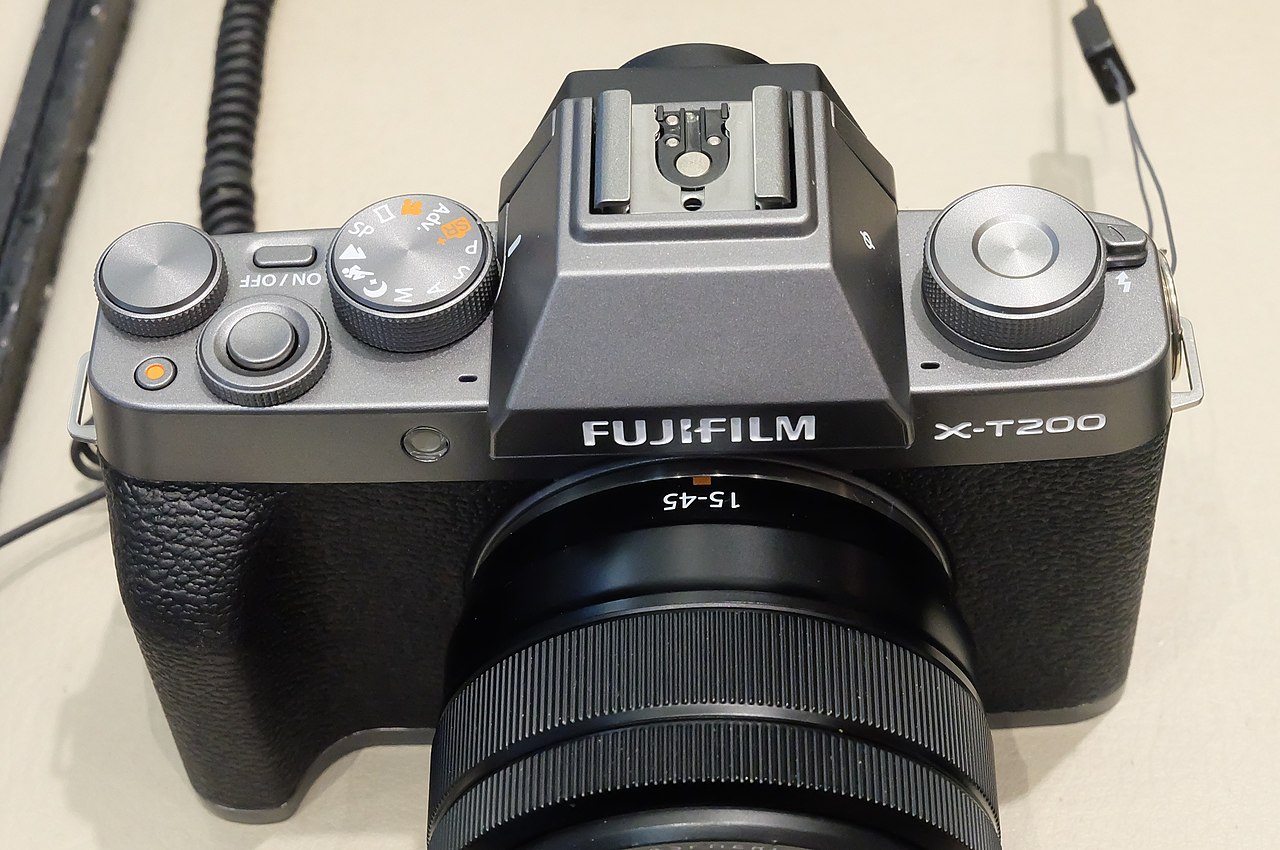
Entry-level X-T style with a large vari-angle LCD. Uses a conventional Bayer sensor.
Verdict
The Fujifilm X-T200 is an entry-level X-T mirrorless body with a 24.2 MP Bayer sensor and a 3.5-inch vari-angle touchscreen. 4K/30p, face/eye AF, 425 points, no IBIS, no weather sealing, 799 USD.
This is for the entry-level user who wants a tilting X-T-style body at the lowest price.
In detail
I have been telling friends this is a sleeper pick for a while. The Fujifilm X-T200 is the cheapest way into Fuji's X-mount. Released in 2020 at 799 USD, no longer in production. Sits in the X-T line, a step down in build and up in beginner-friendliness.
At 24.2 MP on a conventional Bayer sensor, native ISO 200 to 12800, face and eye detection on board. Burst at 8 fps is plenty for travel, family, and most outdoor work. 4K 30p covers what most people actually deliver.
Light, plastic-heavy in places, balanced with the smaller XF primes. No in-body stabilization, so for low light you will lean on stabilized XF glass. At 370g it is the lightest X-T body you can buy.
Battery life is 270 shots CIPA. Carrying a spare is not optional. Single card slot, SD UHS-I. Bottom line: this is the X-T body to look at if you want the classic Fuji dial experience without paying flagship money.
Pros and cons
What we like
- Large 3.5-inch vari-angle touchscreen
- 425-point AF with face and eye detection
- Lightest X-T body at 370g
- 4K 30p video
The headline win is the large 3.5-inch vari-angle touchscreen, a real differentiator at this price. The Fuji film simulations are still here, PROVIA, Velvia, ASTIA, Classic Chrome, ACROS, and they translate to video just as well. 4K 30p is more than enough for most hybrid shooters, and the JPEG recipes people have built up around the Fuji system are a real reason to choose it.
Trade-offs
- Bayer sensor, not X-Trans
- Single SD UHS-I slot, 270-shot battery
The honest trade-off is the Bayer sensor, not X-Trans. No in-body stabilization means a stabilized zoom or a faster shutter in low light. The XC 15-45mm and XC 50-230mm kit zooms have OIS; the fast primes people buy next do not, so shutter speed is your only lever once the light drops. The 2.36M-dot EVF is on the lower-resolution side by current standards. Single card slot is the kind of spec that does not matter until the day it does.
Who is this for
Entry-level users who want a tilting-screen X-T-style body with a Bayer sensor at the lowest price. Travel videographers and YouTubers running a one-person crew can get by. Light enough that it makes a great second body or a daily-carry option. A particularly strong pick on a budget, especially for first-time Fuji buyers.
X-T200 release date and lifecycle
The Fujifilm X-T200 was announced in January 2020.
| Announced | |
|---|---|
| On sale | |
| Launch price | 799 USD |
| Status | Discontinued |
| Replaced | X-T100 |
Announcement and on-sale months are from Fujifilm’s launch announcements. Launch price is MSRP at release, not a used-market price.
Full specifications
| Release year | 2020 |
|---|---|
| Launch price | 799 USD |
| Status | Discontinued |
| Megapixels | 24.2 MP |
| Sensor generation | Bayer |
| Processor | Unnamed Bayer engine |
| ISO range | 200–12800 |
| AF points | 425 |
| Subject detection | face-eye |
| Burst (fps) | 8 |
| Max video | 4K 30p |
| Codec | H.264 |
| Log profile | No |
| Stabilization | None |
| Viewfinder | EVF (2.36M dot) |
| LCD | 3.5" flip touch |
| Weather sealed | No |
| Weight | 370g |
| Card slots | 1 |
| Card types | SD UHS-I |
| Battery | NP-W126S |
| Battery life (CIPA) | 270 shots |
| Film sims | 5 |
Highlighted rows are class-leading within the current Fujifilm APS-C lineup.
Film simulations (5)
- PROVIA
- Velvia
- ASTIA
- Classic Chrome
- ACROS
Compared with


Fujifilm X-T200 vs siblings
How the X-T200 stacks up against the closest siblings in the current Fujifilm lineup.
Fujifilm X-T200 vs X-T30 III
The Fujifilm X-T200 and Fujifilm X-T30 III are both Fujifilm X-T bodies. The X-T30 III is the newer of the two, arriving in 2025. At launch the X-T200 was 799 USD and the X-T30 III 999 USD, making the X-T200 the more affordable of the two.
Fujifilm X-T200 vs X-T50
The Fujifilm X-T200 and Fujifilm X-T50 are both Fujifilm X-T bodies. The X-T50 is the newer of the two, arriving in 2024. At launch the X-T200 was 799 USD and the X-T50 1,399 USD, making the X-T200 the more affordable of the two.
Fujifilm X-T200 vs X-T5
The Fujifilm X-T200 and Fujifilm X-T5 are both Fujifilm X-T bodies. The X-T5 is the newer of the two, arriving in 2022. At launch the X-T200 was 799 USD and the X-T5 1,699 USD, making the X-T200 the more affordable of the two.
Where to buy
The link below runs an Amazon search for this camera rather than pointing at one listing, because stock and sellers move around. As an Amazon Associate we earn from qualifying purchases — at no extra cost to you.

See it in the wild
Owner impressions and real-world photos from the Fuji community.

